Discovering Xarel·lo

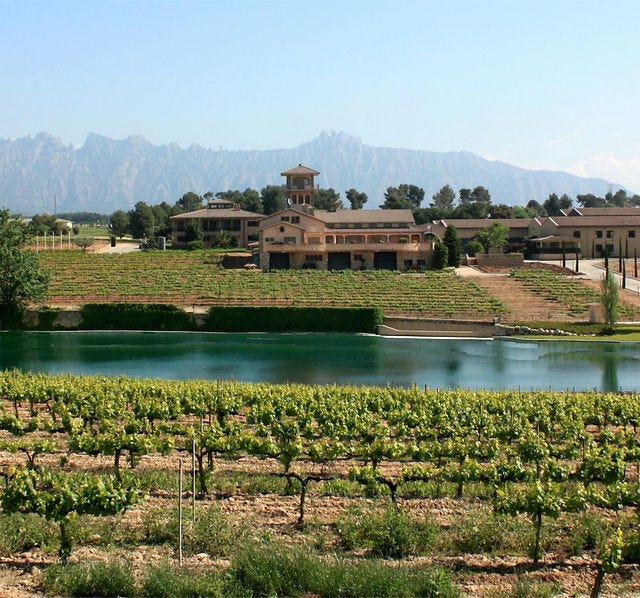
This year the wine fairs kicked off in Catalunya and I set myself the task of discovering Xarel·lo, a grape with an exotic name that I’d thought very little about. Actually, Xarel·lo goes by many names in both Spanish and Catalan, including Cartoixà, Cartuja, Pansa, and Pansal. Nevertheless, the strange ‘x’ and punt volat conjures a treasure from a forgotten past, so I had a look.
The letter ‘x’ represents sounds that don’t exist in Spanish, but in Catalan, it is a vestige of vulgar Latin, denoting the ‘sh’ or ‘ch’ sound. ‘X’ is a particularly meaningful letter, prominent in mathematics after Descartes decided to choose letters from the alphabet, frontwise, (a,b,c,d…) to represent constants, and backwards (z,y,x,w…) to stand for variables. It operates this way in language to take the place of common verbs as in ‘x-ing’ for ‘crossing’. It is used to indicate botanical hybrids as in Magnolia x Loebneri, or Cabernet Franc x Sauvignon Blanc. It is meaningful in describing dimenisons like the common ‘2 x 4’ for a piece of wood. It stands for a strike in baseball or a capture in chess. In its highest order, it is the letter which represents Christ for the Roman Catholics, and therefore wine for us.
The variety is a cross between two outmoded parents: Gibi and Brustiano Faux. It was bred for its utility in the trinity of Cava varieties (including Macabeo and Parellada), giving structure in its strong acidity. It is lythe, linear and sometimes metallic. It rings in your head like the metal wire fisherman put through the heads of trout to suspend rigermortis. Can you believe it?
You might also think about, ‘EXTRA’, ‘EXTREME’, ‘X-Factor’, ‘X-Files’, ‘Chemical X’, if you want…
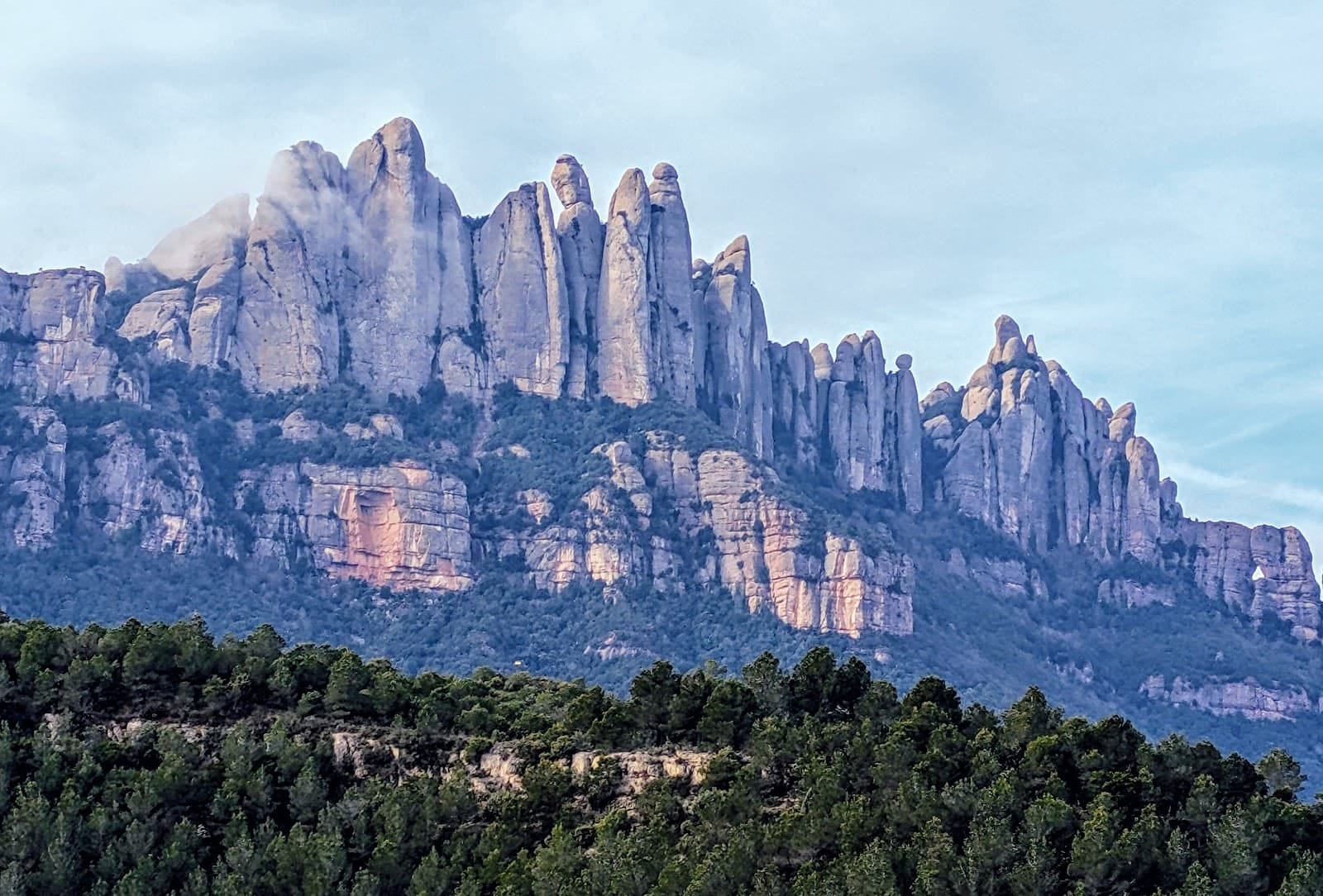
Montserrat means jagged in Catalan. Driving up the switchbacks from Barcelona, this mountain chain looks really weird, thin and serrated, like it was formed with wet hands on a beach. Up close, it is pink, variegated and somehow living. It’s January and raining a lot so this effect is highlighted with gushing mountain streams, thirsty desert tufts of grass, and silvery puddles. The air is sharp and humid. The locals are freezing and talking through clenched teeth despite it being around 40 degrees F.
I’m about 300 meters up, in a particularly bleached and limestony part of the hills while Olga Betrián has her hands deep in her jacket, an indication that we would look upon the massive 100 ha farm, but not traverse it. Like a lot of winemakers, she apologizes for her perfectly scrutable English x my three words of Spanish, and one word of Catalan: ‘Xarel.lo’! Though I try not to pronounce it in her company.
Normally, I feel plenty dumb in France, but my ignorance here was piquant and my head felt like it was slowly filling with battery acid as I searched for words that existed nowhere in my brain — looking for the Spanish word for x and finding only a spinning pinwheel.
For almost 20 years, Olga heads up a remarkably small team of farmers and cellar hands at Castell d’Age. Their number does not exceed 10, which leaves as many or more hectares per worker — which is a lot in a way that is hard to overstate. Moreover, the farm is certified, and virile as it is manicured.
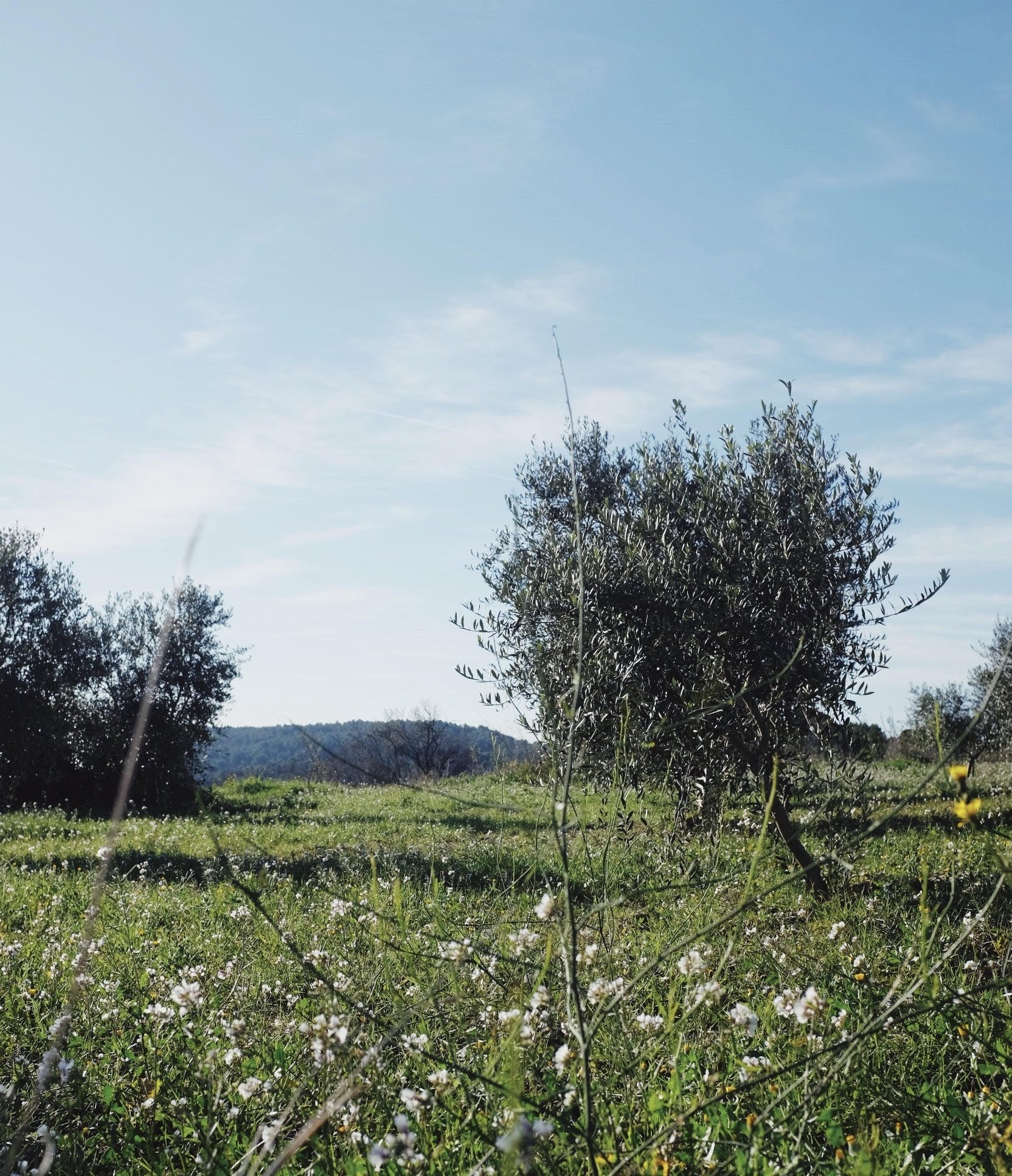
She is happy here, still at her first job as a winemaker, because the family that owns these vineyards allows her to make wine with grapes and nothing else. The cellar was as spotless as I’ve ever seen. She told me that they spend an inordinate amount of time cleaning. They use elemental sulphur, water, and nothing else.
The celler sells the vast majority of their fruit, which is a shame since more fruit should be vinified under the quiet brilliance of Olga Betrián. Most wineries that work with a tenth of the volume at Castell d’Age struggle greatly to not intervene in the cellar. And while I’ve tasted missteps and juice gone awry, offener I marvel at the consistency of Castell d’Age and its honest dedication to clean and transparent wine.
At the center of it all is our aforementioned Cava, none of which is produced outside of the Grand Reserva specifications, calling for a minimum of 30 months of aging on fine lees. Olivia Junyent is the third generation proprietor of the bodega and a veritable sister to Olga. My very deep cynicism regarding “Identity Marketing” could not belie the strong impression that a group of passionate women were running the show and that the wines were showing better for it.
Often, I am nagged by the intuition that circumstances too good to be true are just that. For years, I vassilated on my time and attention regarding Castell d’Age for just this reason. Today, I’m not sure how or why to hold onto any doubt. The production is big; maybe that is what makes natural viniculture better or more efficient? The place is run by a group of women who love each other and their work; maybe that makes the difference? Frankly, it might just be how very far away they exist from the natural wine world of Beaujolais and the Loire valley where I’ve spent most of my wine years. Regardless, this odd, functional variety of Xarel·lo was so impressive here, and it was easy to fixate on it as a way to solve the puzzle and see how they were so easily breaking all of the rules.
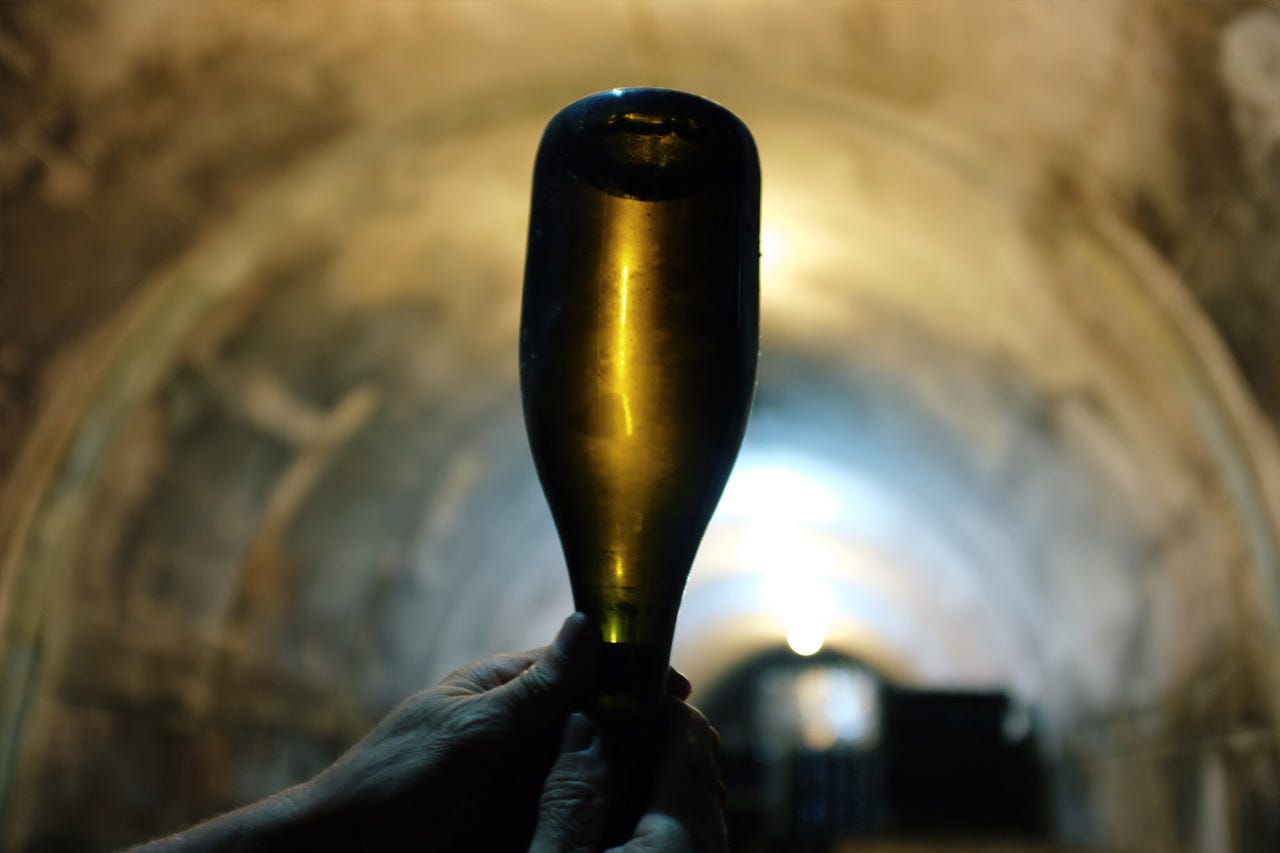
The difference, really, is that Olivia and Olga are not cultivating a variety for a wine that will be the grape and nothing else. They are growing one ingredient for a century old recipe. This requires a different perspective. It takes humility, foresight, a consciousness and faith in tradition, and generations of experience. With Xarel·lo, they are growing the skeleton of their cava — its scaffolding in acid and minerals. They have to grow, pick, and taste for this ingredient with the dream of the whole in mind, two or more years in the future. It is a powerful display of faith, intuition and blind love for the nature they foster. At least, it could be that?
Tasting Xarel.lo at Castell d’Age is like this: The nose is pure citrus, particularly bright lemon, or however its proper flower might smell. On the palate, the sides of your mouth are coated with a bitterness which can also read like oxidation, or deep ripeness. Surely, the acid is undeniable, but more chalky and dry than the tacky sweetness you get with even dry Riesling or Chenin. The pith reads almost like tannins, intensified by its minerality, but softened by a kind of olive brine that makes the whole thing remind you of those bits of orange zest on a plate of greasy olives. It’s hard not to consider that Cartesian grid of acid x base, sweet x dry, rough x soft. The intuition is to instantiate an instance, or find a token for a type.
It’s hard to catch either Olga or Olivia without a smile on their faces. Life seems good on these pretty hills in Catalonia. Still, Olga is usually quiet, slightly less conversant in English than her boss, so I was happy to catch her alone on this visit. We were tasting some of her new experiments and I sort of rudely peppered her with questions about anything but the wine. I asked about the golf course across the street for which she had zero interest (perhaps the secret to the Bodega’s cleanliness, stability, and beauty comes from the chemical runoff from the manicured fairways!). I asked about music and the villa, but finally, unsurprisingly, food was the subject to light her up. She admitted that she preferred more traditional, extracted reds to the trendy clairets the market was demanding. She recommended, with almost a touch of shame, restaurants heavy with a heavy focus on meat, fried food, and more traditional Catalan preparations.
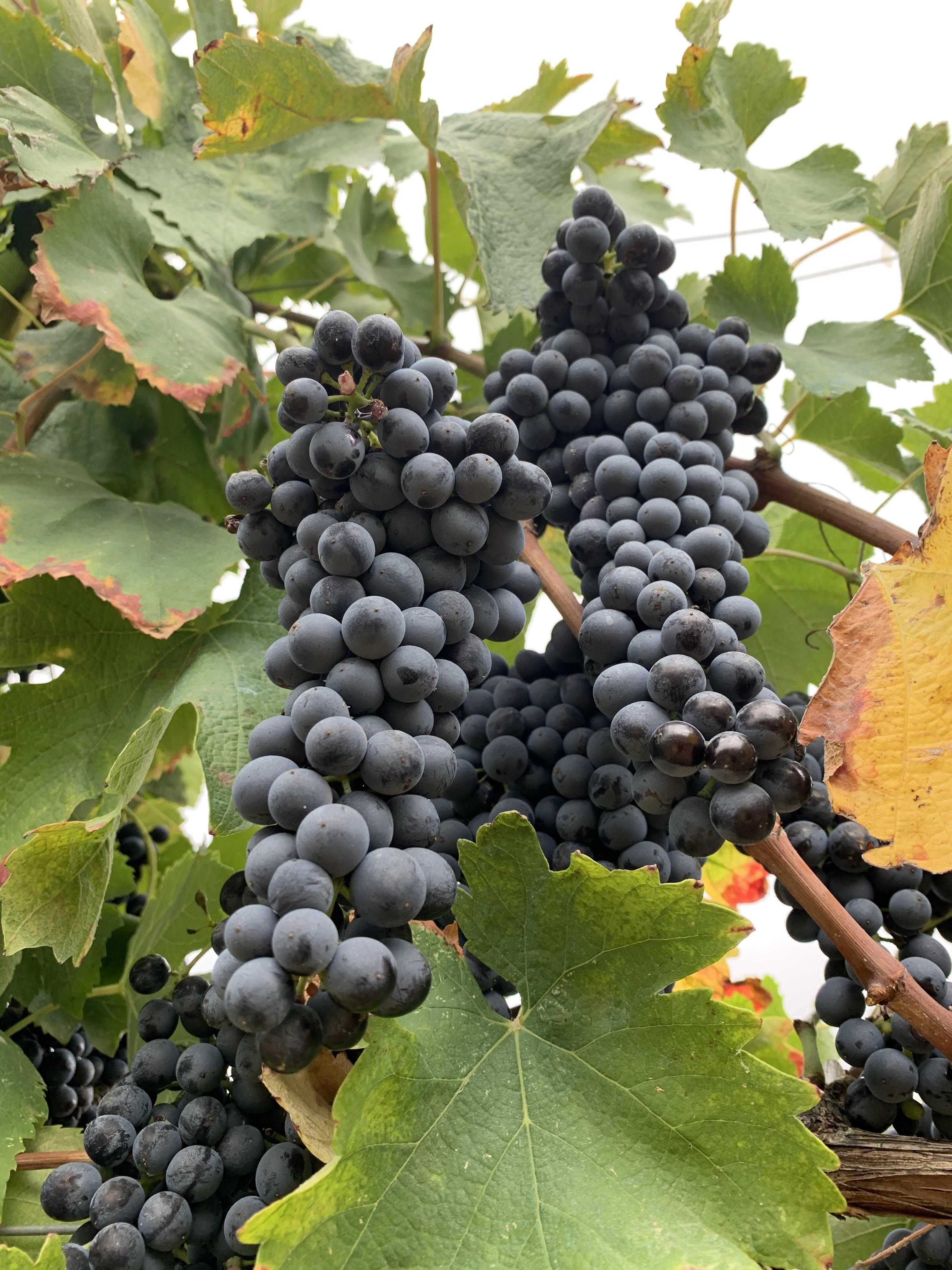
Olga doesn’t make beautiful wine because she is dreaming years in the future of some gustatory innovation. She has a kind of Platonic memory informed by her life and its cultural rhythms. She lives less than an hour away from Castell d’Age, on a very enviable beach, delighting in fried anchovies and grilled pork. Her work, like so many of the winemakers I admire, is a love for a small, epicurean culture such that they represent one voice in a local harmony. Perhaps, it’s like this?
In the same way that Xarel·lo contributes structure to a balanced Cava, the wines of the Penedès are an aspect of a wider culinary ideal. And while the flavors are beautifully small, precise and local, the balance is ideal, such that any curious palate might feel at home in recognition. Constants and variables, abstractions and the ineffable, this is how we seem to discover new wines, new varieties, novel experiences.
Happily, I often have these moments of recognition with Cava, jamon, salted almonds, and flaky breads fried in fat, but to some extent, you can substitute any kind of bright, acidic bubbles with a gout de gras and summon a familiar love. Same too for charred beef with fruit-soaked tannins. So too for briny seafood and chalky white wines like Xarel·lo. Creativity in our job comes from finding a balance between these structures and their irreducible parts — how those pieces relate, and what relations matter.
Beautiful -- no xXx bowling XxX references? 🧐
Qué guay! Learned more about Xarel-lo and enjoyed reading your experience at Castell d’Age.