Vino Naturalini
a re-mystifying wine journey

Welcome and thank you for being here.
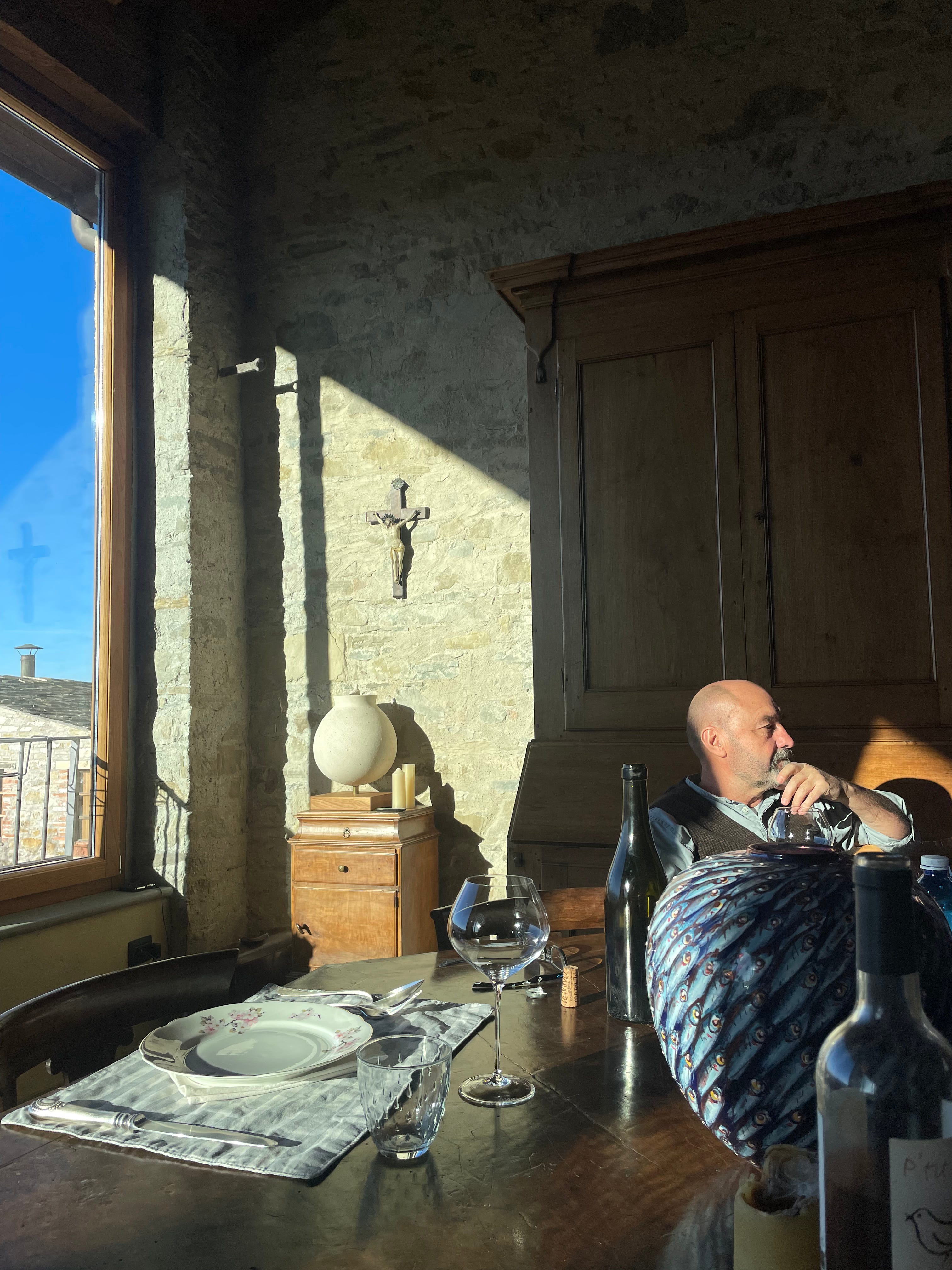
The sun is always soft and diffuse in the massive valley between the Alps and the Apennine mountains, hazy with the smell of burning wood and oil, colors in the atmosphere smashed and dilute. A sprightly and loud glass of Frizzante Trebbiano surprised me with the way it cut through the cold afternoon, 500 or so meters up, a touch above the heavy smog of Milan.
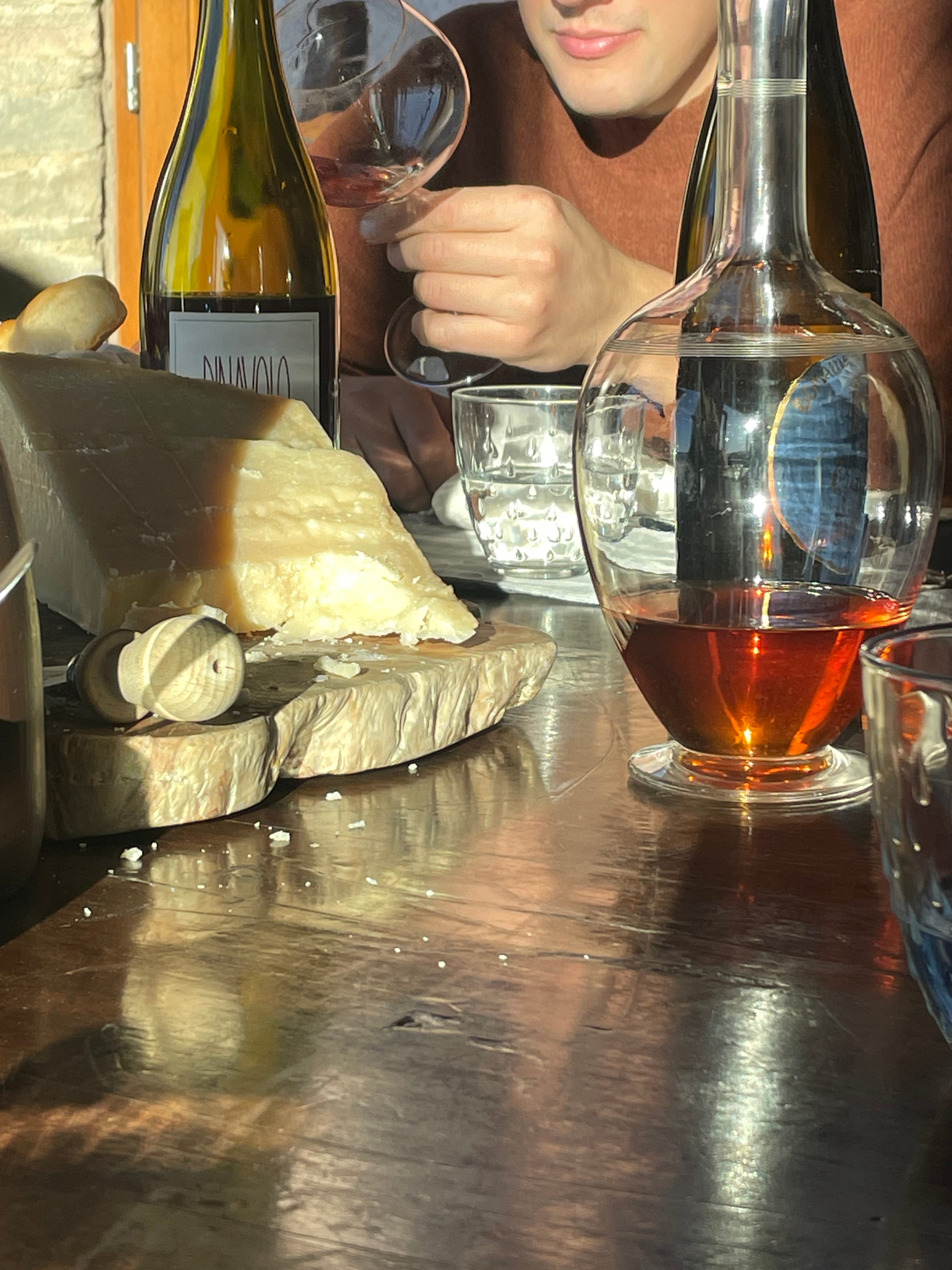
We’re on the hill of Denavolo, between two tributaries of the Po river, in a very quiet and remote house, listening to bubbles pop in elegant glassware, stumbling over 3 languages badly, and visiting old friends. We clink our glasses about one minute into the door because wine people like to get right to it. Giulio flicks the corner of his glass again to bring our attention to the pleasant sound, smiling warmly.
“Zalto?” he says, “bong,” frowning demonstrably. The wine talk has begun, and I recognize the wine in my glass as Tunia’s, a winery we work with and the winery of Giulio’s “copine.”
Shamefully, it is a wine I wouldn’t have dared pour into such a wide and transparent stem, worried that its essential playfulness would be obscured by its overwhelming breadth and complexity. It bears no resemblance to Champagne or pet nat or Spumante or Prosecco, and the mystery of its specific life admittedly scares the salesman in me.
But that was a beautiful glass of wine, in a stunning home, in a remarkable place, where this mountain of a man fit like any craggy exposition of these uniquely calcarious hills.
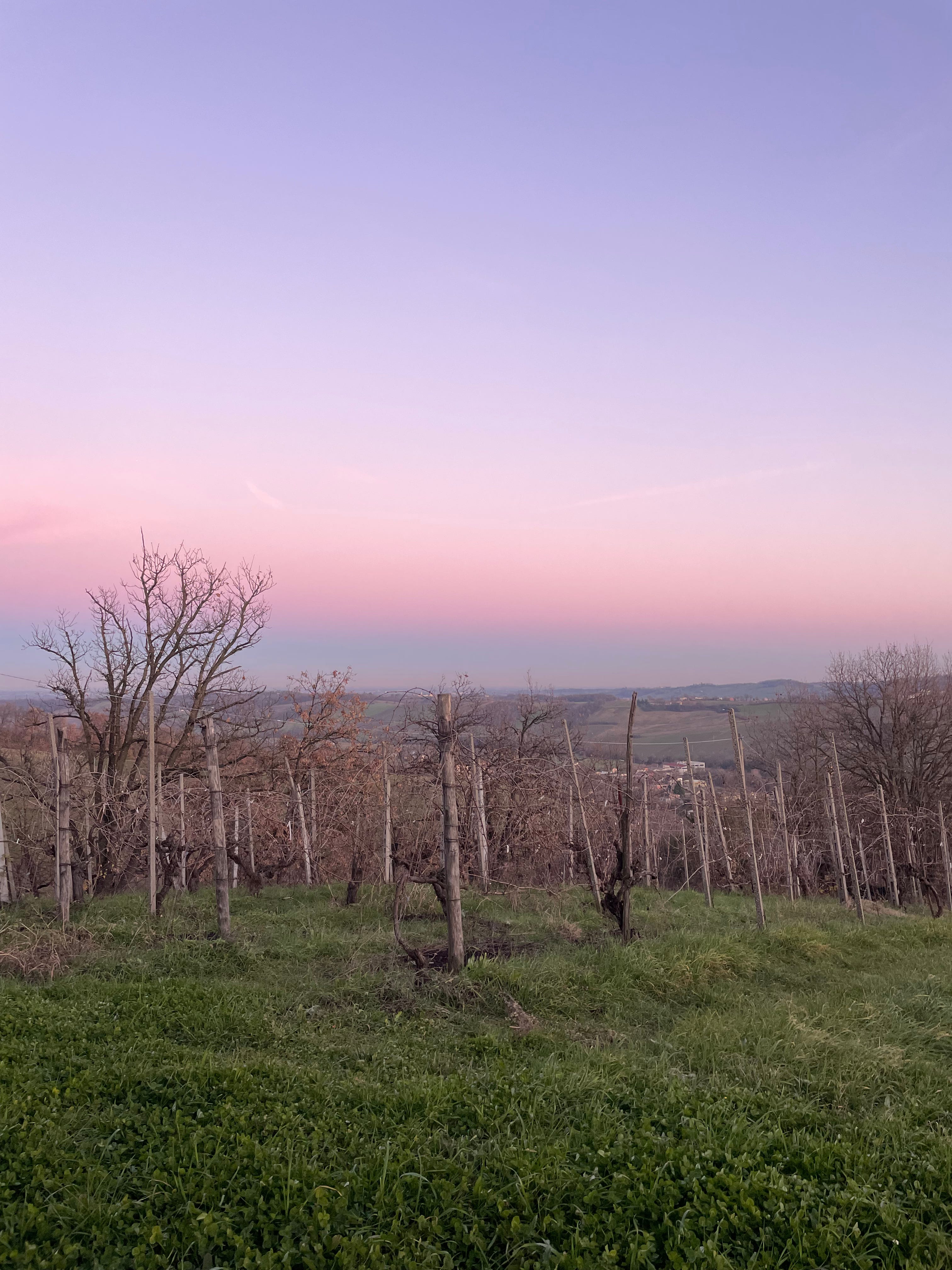
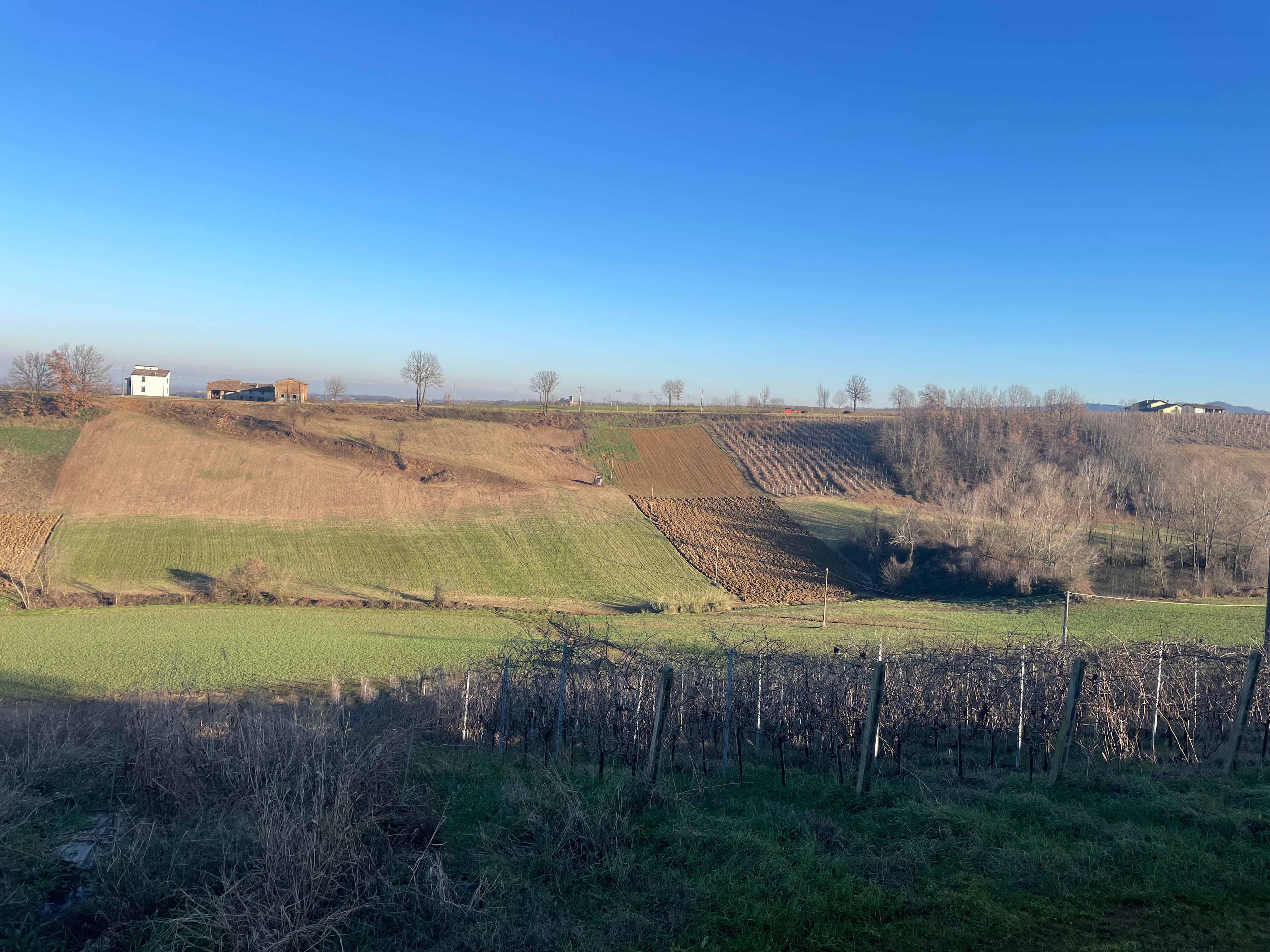
Natural wine doesn’t make the notion of terroir meaningless, but lining up a wine with a place is no longer so simple, and maybe the notion that one could was only ever a Modern myth. That Chave means Syrah from the Northern Rhône or that Tempier means the pebbled soils of Bandol might be the Lynchian dream of a visionary salesman, or the poetic license of a capitalist describing what a wine means “for me”, is relativized by interlopers in formal appellations, ontological rebels, mavericks, traditionalists, dogmatists, or all of the above.
As goes the idea that a wine just is its terroir (or else refers to its sense of place), the rubber often fails to hit the road. Still, it’s hard to discount the confounding factors as totally and only the aberrations of natural winemaking.
We were tasting bottles from Giulio’s cellar in a very didactic way for people who shared 1/3 of a language between them. Onomatopoeia was heavily employed. We drank some good wines, and some less good wines. Only one bottle came from the Denavolo domaine, and zero bottles from La Stoppa.
Tasting and comparing, a few principles seemed to appear as regards Giulio’s philosophy:
Wine needs a significant amount of age to reach its quality potential (5 years at a minimum).
Any addition of sulphur inhibits a wine’s ability to age.
White wine cannot age without some maceration
The north wall of the apartment is made up of two huge windows that look out on the valley, but captures most dramatically an enormous amount of sky. Blue and silver warmed as the sun crowned around the mountains and I noticed a large window on the perpendicular wall that framed the spectrum of daylight from 15 or 20 minutes prior with perfect contrast to the sky in the north wall in front of us.
I thought about the Russian blues, goluboy and siniy, light blue and dark blue. In 2007, John Hopkins ran a famous study that showed that Russian speakers were far better at deciphering between these two shades of blue than non-Russian speakers who only had a general word/concept for “blue” qualified by light and dark. The study gave credence to the broader theory of linguistic relativity: the idea that the language we speak can influence the world around us or even the way we perceive the world.
Words do seem to precede the world in funny ways. Earlier in the trip, in the nearby Palazzo Farnese, we saw an odd replica of a storied wine cup cherished by Pope Paul III Farnese. The real thing had been lost, but the curators decided they’d have a crack at making it as it probably looked. Why not? An historical fiction.
At the time it recalled scenes from my favorite work of historical fiction, the culty Wolf Hall trilogy. That day, for some arbitrary reason, I could not summon the name of the main character while chatting with the other courtiers. One of them was familiar with the books, but similarly spot-blind for the name. We named other central characters of the novels and waited with a kind of serene pleasure for the memory to slowly float back into our minds, the first letter, the initials, and then the whole thing. Where had the name gone? Where was it waiting? How had it been summoned?
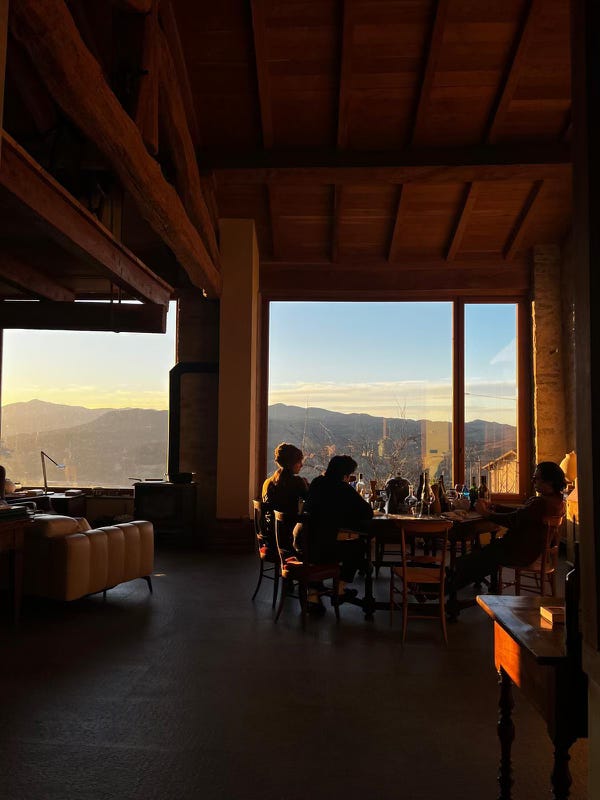
We’d been silent for a few sips of something really beautiful when the sun sank completely behind the ridge-line and Giulio says, “Now it will all turn red,” which it did. We talked about the word for ‘sunset’ in different languages. I always loved the German abendrot or evening red. It seems to imply the existence of a morning red as well, which feels intuitively veridical, like the Russian blues, but betrays the semantic value of the word ‘red’, which has very little value otherwise.
In Rudolf Steiner’s lectures on agriculture, he asserts that any and all of the red things in nature are under the cosmic influence of the planet Mars (marzrot), from the tomato to the beating heart, or even that fancy gamay clone with red skin and white flesh. He says
“Just take a look at the green leaves of a plant. In their shape, their thickness, their green color, a plant’s leaves are the carriers of the earthly factor. However, they would not be green if the cosmic force of the Sun were not living in them too. And when you get to the colored blossoms, it is not only the cosmic power of the Sun that is active there, but also the support that the cosmic Sun-forces receive from distant planets — Mars, Jupiter, and Saturn. For instance, if we look at a rose, we see the forces of Mars in its red color. Next, look at a yellow sunflower. It is not quite right to call it a “sunflower” — we give it that name only because of its shape. It ought to actually be called a “jupiterflower” on account of its yellow color, because the Jupiter-forces supporting the sun are white bring out the white and yellow colors in the flower.”
Can you believe it? It’s easy to see the green of a plant as evidence of the sun’s radiance, less clear how the red of a rose is relevant to Mars, but the idea of the jupiterflower is a nice one.
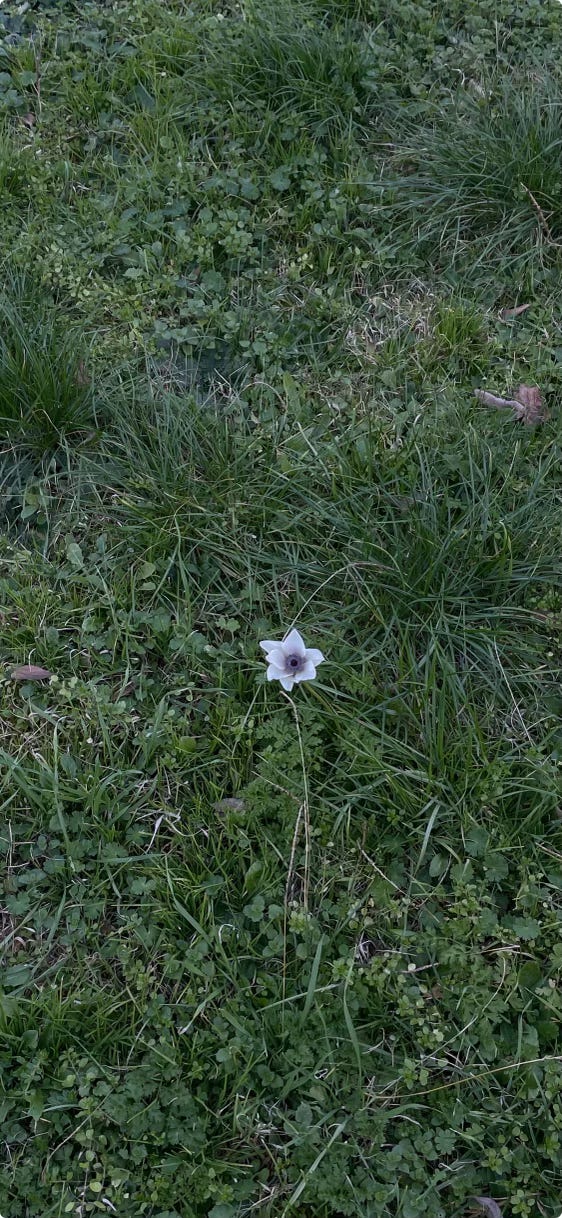
A few days after my visit with Giulio, I had another funny encounter with a great artistic replica. Outside of the Uffizi galleries, the would-be statue of Michelangelo’s David was baking in some afternoon red. It recalled some very kooky lectures from firebrand and genuine madman Jack Kruse (an admirer of Steiner), who had an epiphany in front of the real statue of David that would lead to his mitochondria focused theory of metabolism and medicine whereby our exposure to the sun’s radiation is the most consequential aspect of our health and wellbeing. (I have purchased and wear blue light blocking glasses in a Pascal-type wager.)
What puzzled me about this David was his statue and great beefiness. Who was this muscular freak with enormous hands and bulging eyes? Isn’t David meant to be the wimp who beats the odds to kill the giant? Whose the giant anyway?
Then, in my mind’s eye I imagined what Goliath must have looked like in Michalangelo’s world. He got a lot of sun. I saw him like an ancient and terrible ghost towering above the city, dwarfing the statue of David. I like thinking that I shared that invisible thought with some renaissance-era cool guy, high on orange wine.
Significance so often takes this circuitous path. Homer Simpson, the David of my time and culture, is beloved not for his oafishness and stupidity. We love him because Marge loves him and because Marge is the easiest character to love.
Ghosts of prejudice abound and color our experience for better or worse. And because wine is a bit of a psycho-active thing, set and setting can almost always overdetermine what you, or I, or the DOCG might hold to be true. My Christmas punishment was to stray from my Italian wine study (in Italy) to indulge in a bottle of 2021 Thibaud Boudignon Savennières beside a plate of Coppa and ultra fatty Salame. What a crime!
My last night, at Cafe Brunello, I asked a confused somm for a Brunello with age that was also “maybe…slightly…more natural?” in some sense? I’m sorry?” Poor guy.
“Well, that is difficult because natural wine is more of a new thing, so it makes it difficult to know about the old wines.”
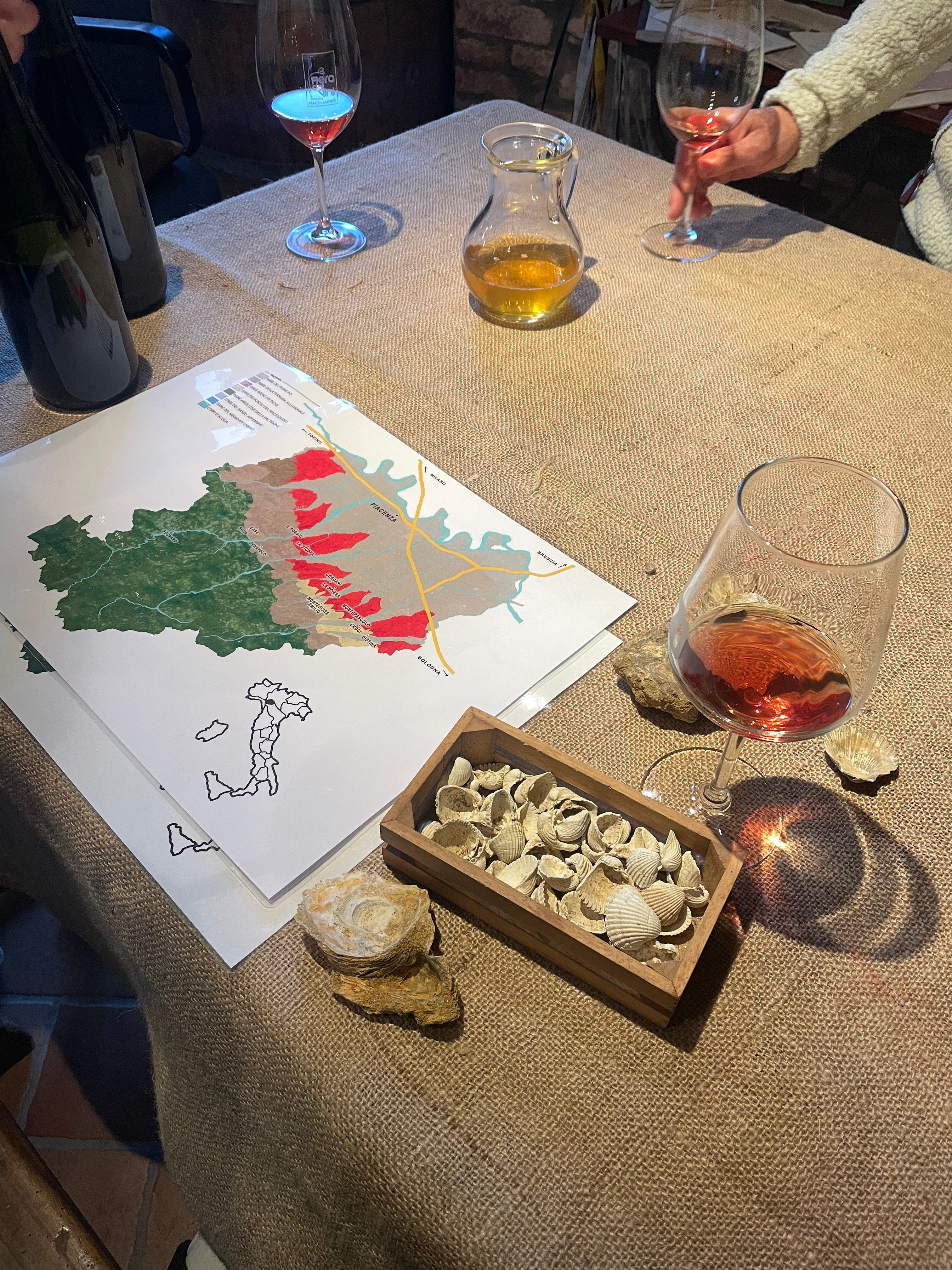
Tell that to Massimiliano Croci who tells me that macerations and naturally sparkling wines were made in Piacenza probably since the Romans or earlier. It was just a part of the place, the cuisine. His partner, my dear friend Elisabetta Montesissa, is also one of our winemakers and the Marge to many more impressive Homers. She likes to open special bottles together and braid hearts of bread from wheat she grows to welcome you home. Pretty good.
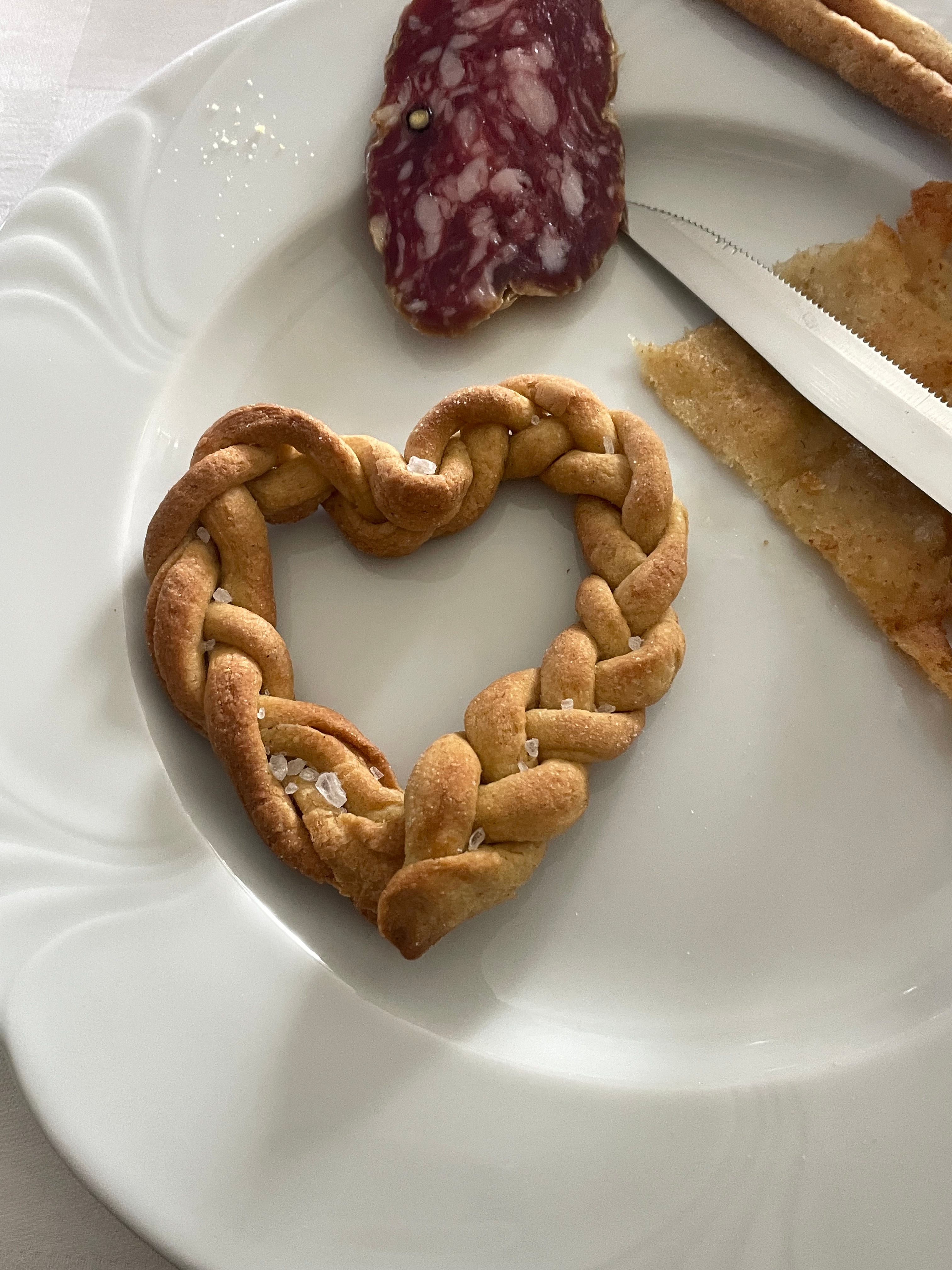
Massimiliano and I, in a different but similar style of language difficulty, were tasting besides maps and rocks. He thinks nobody outside of these traditional regions need bother with macerations, worrisome of trends uncoupling wine from its great and beautiful tradition. He isn’t afraid of sulphur when needed, though he does agree that age is important in wine.
Betta, the wisest of all, says the point of wine is to finish the bottle, for joy, for pleasure. I think of grapevines evolving to climb trees to delight birds who expend all those calories chatting and singing away, without grammar or meaning. Betta’s remark seemed to recall something in Massimiliano. He says, in a funny voice, “wine philosophers…”and like a cartoon starts to swirl his glass, hold the wine to the light, sniff emphatically, furrowed brow, stroking his chin saying, “hm, hm, yes, hm,” while we laughed a lot.
Further Reading
Baker, J. A. The Peregrine: The Hill of Summer and Diaries. HarperCollins UK, 2011.
Kruse, Jack. Epi-Paleo Rx: The Prescription for Disease Reversal and Optimal Health. 2013.
Lancerio, Sante, et al. The Wines of Italy Judged by Pope Paul III (Farnese) and by His Cellarer Sante Lancerio: On the Nature of Wines and the Travels of Paul III. Independently Published, 2024.
Steiner, Rudolf, and Catherine E. Creeger. Agriculture. SteinerBooks, 1993.
Always such a pleasure to read!!