Trying to Learn
Welcome, and thank you for being here.

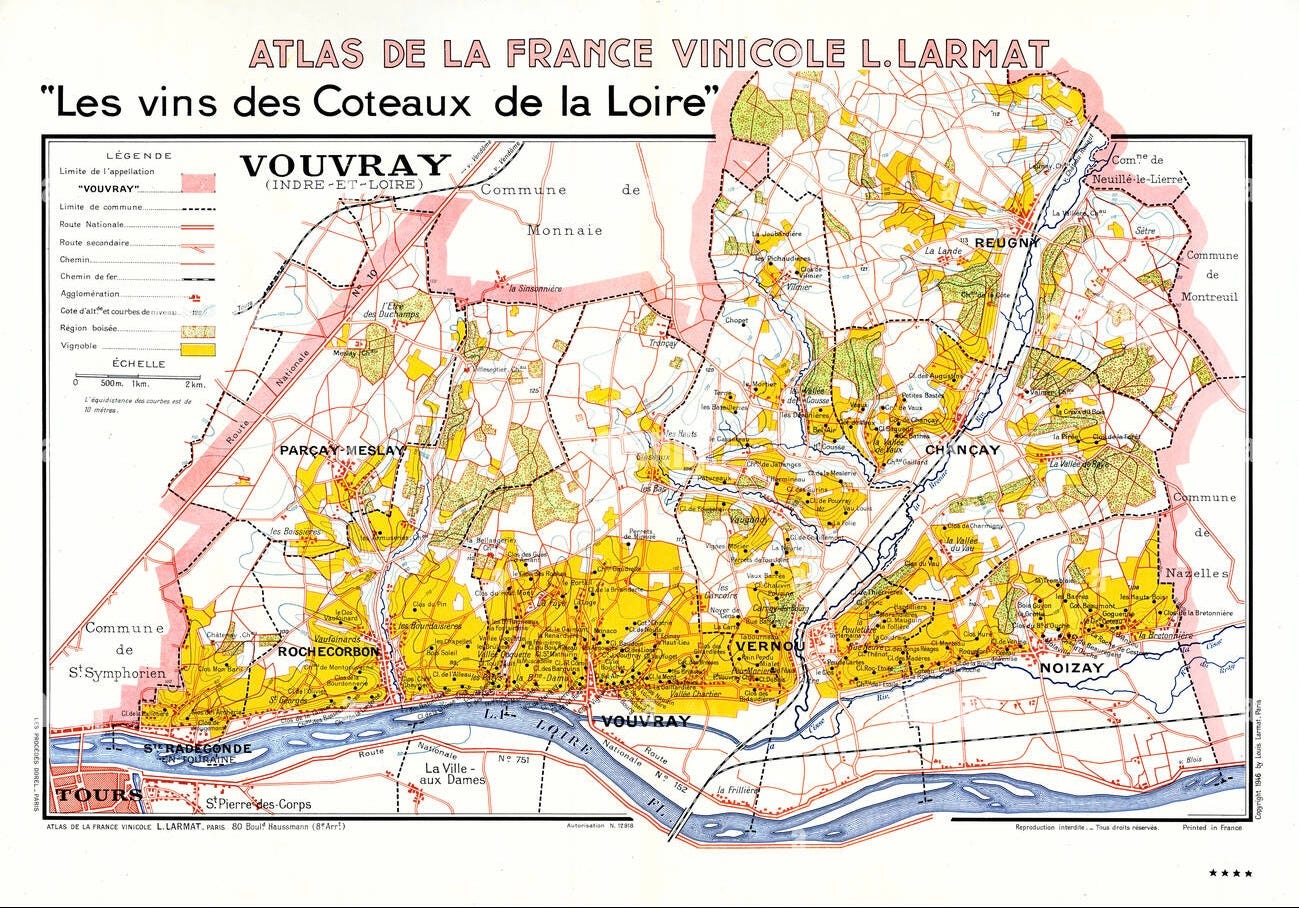
Now it seems very cynical, but I remember looking at a proposal from a new domaine in Vouvray and feeling my eyes gleefully widening. AOC and all, wines like these marked a contrast with a lot of the wines in our current portfolio, and the bigger natural wine community too. I imagined ironed-out wines of balance and elegance. I thought about demonic things like residual sugar and new oak. With luck, I had drunk some Huet, some Pinon, some decent crémant, and I made a kind of triangulation. This map in my mind was Vouvray, and it meant certain things.
Those things, up until I read this proposal, did not include the name Thierry Puzzelat. Thierry, for me, was and is a hero of the “natural wine” movement. Not only as a remarkably talented winemaker in Touraine (Clos des Tue Boeuf), but also as an importer in France, and perhaps most importantly an open and honest mentor to so many inspiring professionals looking to work in the world of natural wine. For me and for others, Thierry was natural wine. A force against the tyranny of tradition, dogmatism, the Appellation system, industrialization, and all the other enemies of the winemakers we know and love.
This, of course, is the first hint to my ignorance. Puzzelat had actually made his own Vouvray in certain years. Here in front of me were wines from those very same vineyards, under the stewardship of two young brothers who wanted to make natural wine in this traditional place. Those two things together sounded very good.
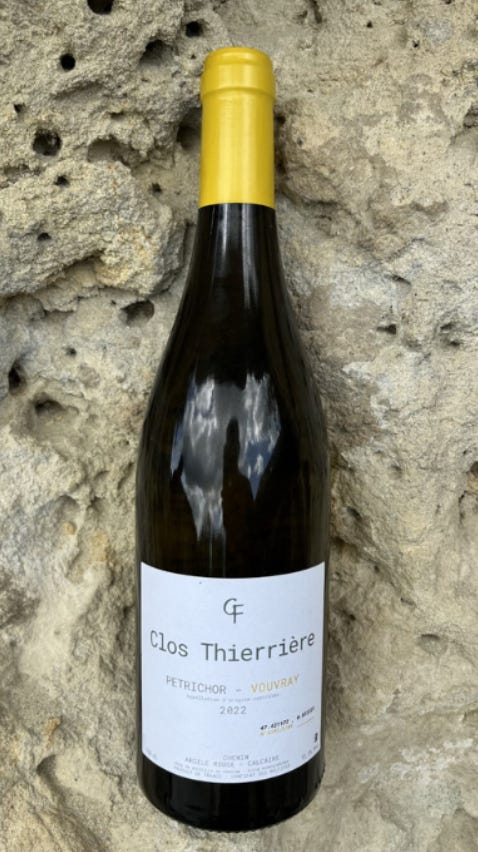
The first wines from Clos Thierrière came to us and were both of those things, completely. Everyone on our team was excited, our close customers too, but the wines were also selling over that imaginary line between the "natural wine buyers" and the more traditional buyers, so of course we were happy and my idea of natural Vouvray seemed vindicated. The wines were such a perfect vision of what I had imagined. They seemed lithe and unencumbered, with incandescent acidity. They snapped with freshness, contrasting so many other great wines of Vouvray. All the same, they were youthful and earnest -- clearly suitable for aging. They were daring yet respectful of their place and balance. They did all the things, and in their very first vintage.
One wine from a single parcel, 2022 Petrichor, seemed to capture the attention of most of my most beloved tasters. It is a parcel on the northernmost end of the property with 40 year-old vines in red clay. Compared to wines from younger vines, and cuvees in silex, this wine had the most bombast and fruit. It's a powerful wine which, though dry, seems to have the memory of sugar imparted onto it. To me, it was a mysterious wine that would be revealed by age or the right dish. For all of my customers, it was fully formed and maybe the most special wine of the bunch. I was missing something they saw intuitively, which is always exciting and frustrating at the same time.
But I had a clue! Petrichor, I knew at least, was a romantic name for the smell after rain. It was a pretty notion, but also a way to find something deeper in this wine, an understanding of the wine as the winemakers knew it. I did a very modest amount of digging and found the mineralogists and organic chemists responsible for the term. 'Petri-' comes from the Greek for stone or rock (like in 'petrify'), and 'ichor' means a kind of tenuous essence. This ethereal, ghostly thing, I thought, spoke to the soul of this wine. I read a great debate arguing for and against the organic nature of this phenomena. Maybe it was purely chemical, or maybe it was bacterial, fungal, living.
I asked an AI computer what the smell after rain was like, too. That was interesting and disappointing. I typed "What does pyridine smell like?" into google. Top answer on reddit: "cum in a can of sardines." Wow!
"What does quinoline smell like?"
"Givenchy Gentleman 2017."
"Woody, earthy, mossy, slightly spicy, cardamom, ambre, heavy...."
"What does acetaldehyde smell like?" Ah, that one I kind of knew. But lot's of Chenin smells like bruised green apples.
"What do gamma lactones smell like?" Generally fruity, some fattier than others, peachy, apricot; some hint at a dairy note.
Going back to ancient India, clay potters would capture the steam from baked pots to use in the manufacture of perfumes. Called, matti ka attar, or "earth perfume", the unmistakable scent lives a bit in all of our nostalgia -- no less so than our winemakers who took the name for their red clay vineyards. There's even evidence that cattle in drought conditions are stirred by the wafting scent of petrichor.
"What does geosmin smell like?" Geosmin is extremely volatile and humans are extremely sensitive to it. It is produced by certain bacteria and is captured in bubbles as rain hits dry rocks, then is released into the air. The smell is slightly musty or earthy.
Elemental sulphur apparently has a part to play as well, catalyzing in dry areas after rain. The most gorgeous bullshit of all was my tunnel down the rabbit hole of ammonia, and nitric acid that forms when lightning strikes fix nitrogen in the atmosphere. "This can lead to a sharp/clean scent associated with thunderstorms," says an AI computer that I asked.
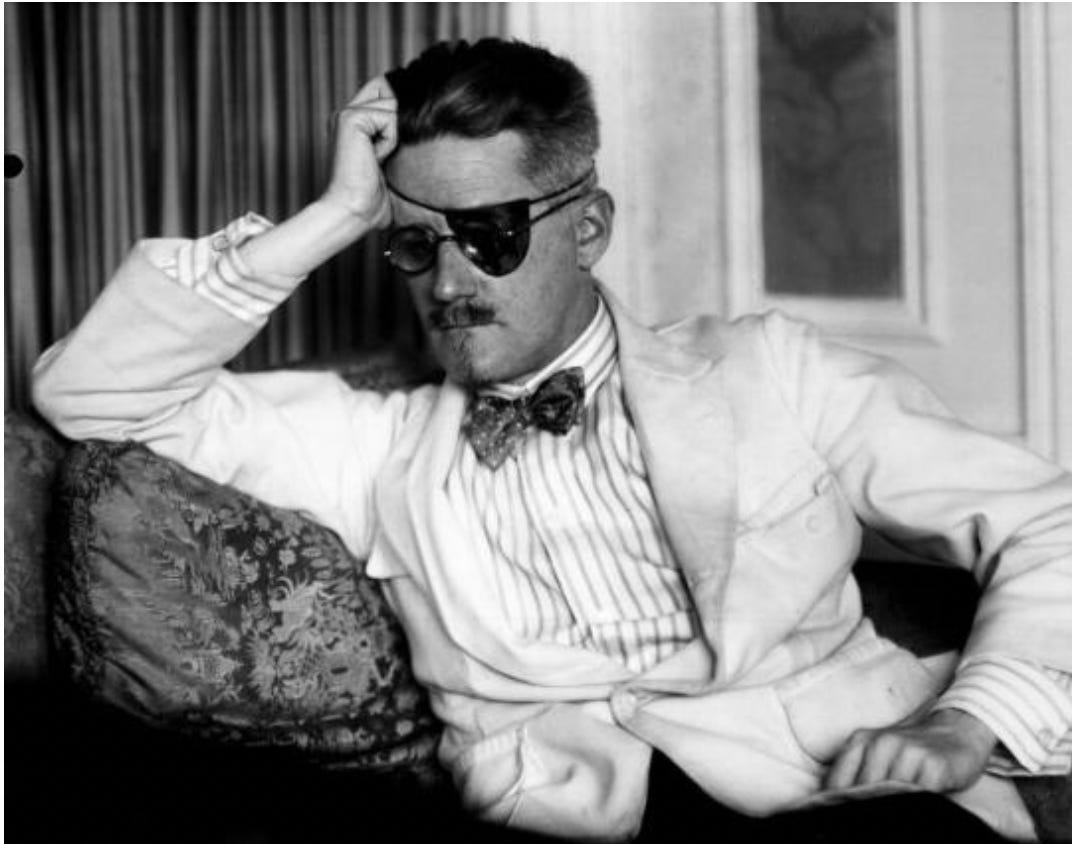
Tasting 2022 Petrichor, I found all of these notes could be summoned in one form or another. I found them all in the glass, when I looked hard enough. Well made wine is so much more complex than we can understand, and our faculties of taste and smell are extremely basic. For better or worse, the chemistry, geology, botany, and also the poetry surrounding the talk of wine is extremely important to our experience of taste. In just the same way that my very early ideas of Vouvray obscured (and informed) my experience of the wine, a story about soil, chemistry, and Streptomyces gave me another gloss on the thing in front of me. Sadly or happily, that's all we can ever get are glosses on the thing. We can try to be objective where we can, but we have to be open to, kind of, romantic and magical suggestions as well. For this glass of wine, the acidity of its soil type -- or even its grape variety -- are as important as a concept like petrichor, whether used by organic chemists or by James Joyce.
We don't have to be relativists or subjectivists to know this either. Metaphors, analogies, scientific clues... all point at real things that exist in a complex glass of wine. We know this because these kinds of metaphors and analogies don't apply to simple or base wines, but they so evidently do for all the great wines we know and love.
Concepts scientific and romantic point not only to qualities in a glass of wine, but also to parts of our shared experience. I had a very charming cab driver tell me the names of his three daughters, and the meaning of those names in Mandarin. One was the feeling of springtime, the other was the smell in a forest, the last I forget, but if it had been ‘petrichor’ I would have remembered.
For me, the 2022 is all of these things and nothing less. It's Vouvray that I love, it's lightening-fixed nitrogen, it's yellow juice made from biofilms, it's some of my friends' favorite wines, it's that Chinese guy's daughter, on and on. What can be said without question is that the great wines have the ability to couch all the base and transcendental things at the same time. Today we have more of these wines landing, along with the wines from Silex, some 100-year-old parcels, and finally-finally-finally the crémant. I hope we get to discover a lot of gorgeous nonsense together soon.