Go Dupe Yourself
Minerals, a return to the topic of oysters, natural wine and more

Farming dreams are a modern seduction. For city dwellers, the vision of making a living from the earth salves the psychic wounds of a day job, and acts as an antidote to urban malaise. If you could just get out there on the land, far from spreadsheets and stress, cubicles and car alarms, things would surely be different.
Welcome and thank you for being here.
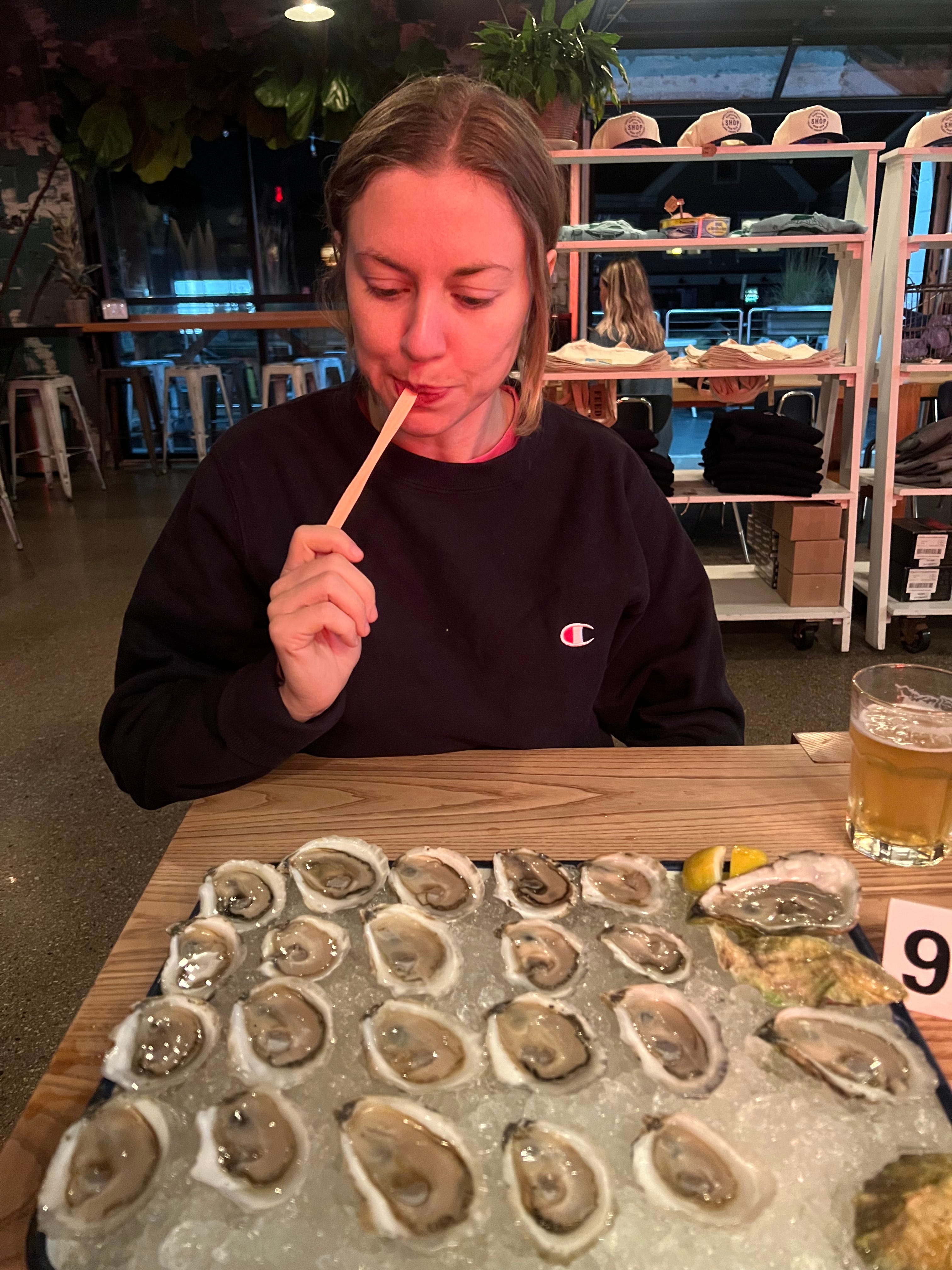
I don’t know how else to tell you why we were eating 60 oysters a day. Recently, my nutritional life has been preoccupied with the importance of eating and drinking a wide range of minerals. It began with a really fascinating and transformative article by chemist and oenologist, David Lefebvre, on the topic of minerality in wine. He says that as early as the Cistern vignerons of the 12th century, the conception of fermentation has been a twofold one. The first is our everyday understanding of sugar’s conversion of sugar into alcohol. The second is a decomposition of organic material, and a release of something known in those days as the spirit or “soul of the wine.”
Lefebvre convincingly argues that this mysterious and discernible "spirit” refers to the mineral signature left in a wine whose pectin has broken down into salts, iron, magnesium, and other trace minerals. He further argues that this particular signature creates typicity in wine, and that when we are blind tasting for terroir, it is mostly the wine’s mineral content that differentiates one glass from another.
This point is further corroborated by MS Nick Jackson, in his book “Beyond Flavor, a practical guide to wine tasting by structure.” The book is a tool used to walk the reader through his or her tasting experience with a special focus on the shape the wine makes in your mouth as a function of variety or place. He explores acid, tannin, and minerality in the great wines of the world, illustrating (literally) the spiky acid structure of Riesling, or the boxy tannins of California Syrah.
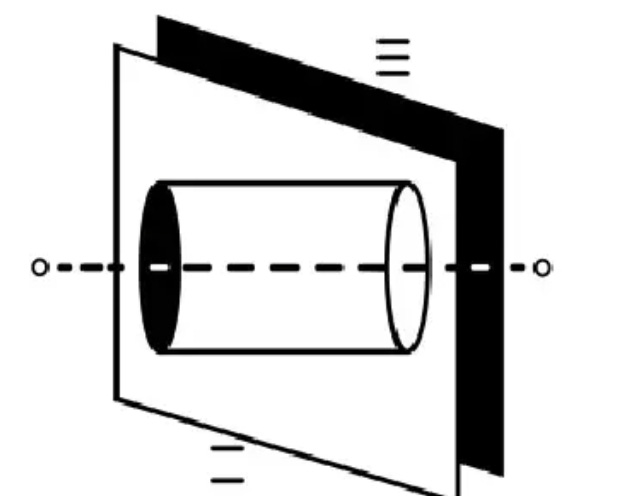
Chardonnay
The linear, mineral impression of a wine from chalky limestone was one I could easily identify, but in the book many other complicated shapes abound. The apparently demonstrative signature of minerals in wine, together with Lefebvre’s ideas, has opened a new dimension of wine tasting for me. Many seemingly simple wines with a straightforward fruit flavor have opened up to me as beautiful, glimmering constellations of complexity and microscopic rocks. My favorite wines today are those understated, subtle wines that hide their complexity in this way.
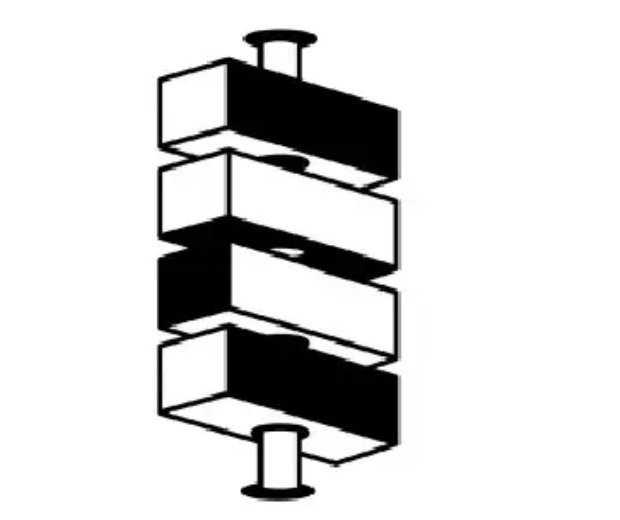
Riesling
Why do some wines have this signature of mineral complexity while others do not? For me, this is one of the central questions of viniculture, and one that won’t be answered by me. But I have to admit that I’ve developed a romantic notion following Lefebvre’s insinuations about the soul of Cistern Champagne. Part of fermentation is just about liberating inorganic compounds from the pectin and tannins of a ripe grape. It is about chemically re-arranging these parts in order to make these salts and minerals available to perception. Why? Because these shapes are pleasing, but maybe also (or in order that) they are more readily available for digestion.
Modern chemistry has afforded us an encyclopedic taxonomy of the vitamins and minerals that make up the constituents of our diet, but less is known about how and to what extent our bodies absorb these things. As someone born into the asthma, allergy, and autoimmune disorder generation, I’ve spent a night or two in hospitals struggling with different poisons. They’re called ‘intolerances’ today. Out of necessity, I’ve developed a sort of common-sense notion that simpler, broken down foods are easier to digest, and more and more I’m convinced that this was known instinctually for most of our past.
All of this lecture was great punishment on our 6 hour drive to Maine for a market visit. My unwitting victim was my friend and wine colleague, Zoë, who took all of this fun and interesting information with her typical grace. I was secretly gearing her up for the freak-show of oyster consumption. Apropos of my mineral dreaming, oysters have become one of my staple food groups, and fresh specimens from Maine were igniting great — talkative — excitement in me.
Zoë is a good sport. We went on to eat dozens from Damariscotta River to Freeport to Pleasant Cove! Pleasant indeed! and moreover, remarkably complex. They had a marked typicity and transparency the way great Riesling or Burgundy does. Also, they made us feel very good. Maybe this simple mollusk had a low digestive load? Manganese, Zinc, Selenium, Sodium, Potassium… but all of these not trapped inside complex sugars or carbohydrates. All suspended in water in a substance called, ‘liquor’. Hmm…
We stayed in a hotel next to the world famous Tandem Bakery. I woke up early to stand in line for coffee and pastries, but really I could think only of more oysters. Somehow, this much was clear to Zoë, and after 20-30 minutes of waiting on line, she approached me with an exciting alternative, reading me extracts from the copy above this article.
She says, “This will be so nice. It’s just outside of Portland. They raise their own chickens! It’s a farmhouse! They make their own cheese; it’s perfect.”
What luck! Some real and farm fresh food, something local, a breakfast fit for a natural wine importer.
“Oh!” she says, “They stop serving breakfast at 11. We’d have to leave now.”
I took very little convincing and we hit the road, myself very relieved, my heritage slightly wounded. Sadly, it wasn’t 15 minutes before we found ourselves in the parking lot of the Sheraton Hotel. As it turns out, the dream of urban farming was just that.
Eating overripe tomatoes, fresh from the vine and bursting with juice…tending to a flock of backyard feathery pets, cavorting with goats…This is the life you were meant to live. In your heart and soul, you’re a farmer.
“Do we go inside?”
“Nowhere on the website does it say ‘Sheraton’.” How bizarre?”
“Maybe the farm is around back,” I said, “Sometimes hotels host amazing restaurants.”
“Yeah, yeah.”
The magnetic strip below us triggered the sliding doors. It was clear why breakfast ended promptly at 11: We drove out of town to find ourselves at a continental breakfast a la Sheraton Hotel. Nice!
We are modern day homesteaders…we are vibrant, colorful, outgoing and modern. We work hard…finding a purpose and pride in our professional life, but love to let loose and smell the roses at every moment possible. Whether it’s on the farm, behind the wheel of a tractor, or at our city job we value a lifestyle that’s meaningful, sustainable, environment friendly and health conscious.
We are the people who raise chickens in our backyard, we make our own bread, we use a sewing machine, grow our own food, we build fences and fix what’s broken. Modern day pioneers who have removed ourselves from the Rat Race. We are comfortable wearing boots and jeans. We love beautifully handmade things. We enjoy good music, good food, good books and good friends.
City Farmhouse welcomed us eagerly with droning, Morning Show televisions, a faux fireplace, faux wood-burning oven, paper napkins and room-service utensils. We laughed, but I was worried about my minerals! Sure, we’d been duped, but we’d make the best of it. We would get to the bottom if it. We would derive some lesson.
Neither of us had the heart to ask our sweet and matronly server about the chickens around back, but we noticed quickly that the tractor on the website was a photograph on the wall. I did ask for an extra side of bacon, which the woman assented to, after turning it over in her mind a few times. In the end, there were 4 small strips, and I did some silent arithmetic concerning the situation.
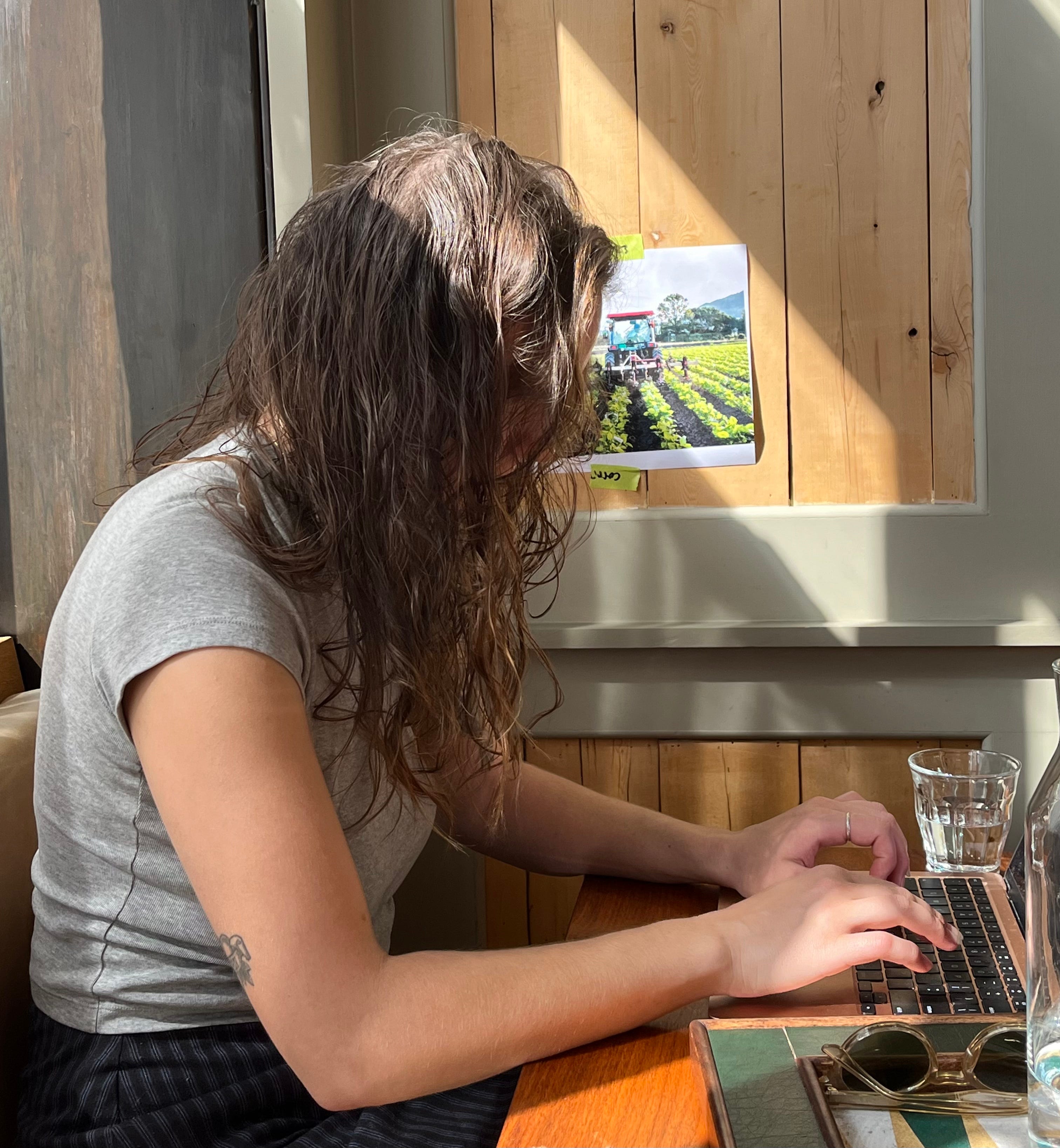
(Dramatization)
We’d been led astray by our quixotic fetishization of the authentic, essential thing. The dream of the urban farmer advertised by City Farmhouse was us, pretending we could use our cell phones to divine a healthy, local meal with lots of minerals. What the heck? Why were two people whose job it was to seek out authentic, real, un-fucked-with, anti-corporate, sulphurless wine so easily lured into this trap? Had the plastic finally traversed the blood-brain barrier? Was it all Zoë’s fault and I’m the smart one?
Back at the hotel, the golf channel whispered at me in a quaint, Australian accent. The overlapping shades of green calmed me. There wasn’t language left to describe the kinds of things that we were looking for. Words like ‘organic’, ‘natural’, ‘local’, ‘authentic’, and worst of all, ‘artisanal’, had all been appropriated into meaninglessness. How was I supposed to ask my AI powered search engine for real food with an abundance of bio-available trance minerals and expect not to be duped!
A special K commercial followed a smattering of polite clapping. It was the classic setting of a mother chasing after her children, cleaning a mess in their wake.
“Every mom deserves to eat some fruit… that wasn’t on the floor…”
Dear God! Don’t we want our fruit to come from the floor?! Where is it supposed to come from? This was a brand of propaganda I could understand, a fear of nature and a privileging of sterility and corporate oversight. What if these advertisers started stealing from our mode of speech, our language. What would our customers do? Wine is complicated enough, how can we parse what’s real from what isn’t? Where would they get their minerals!
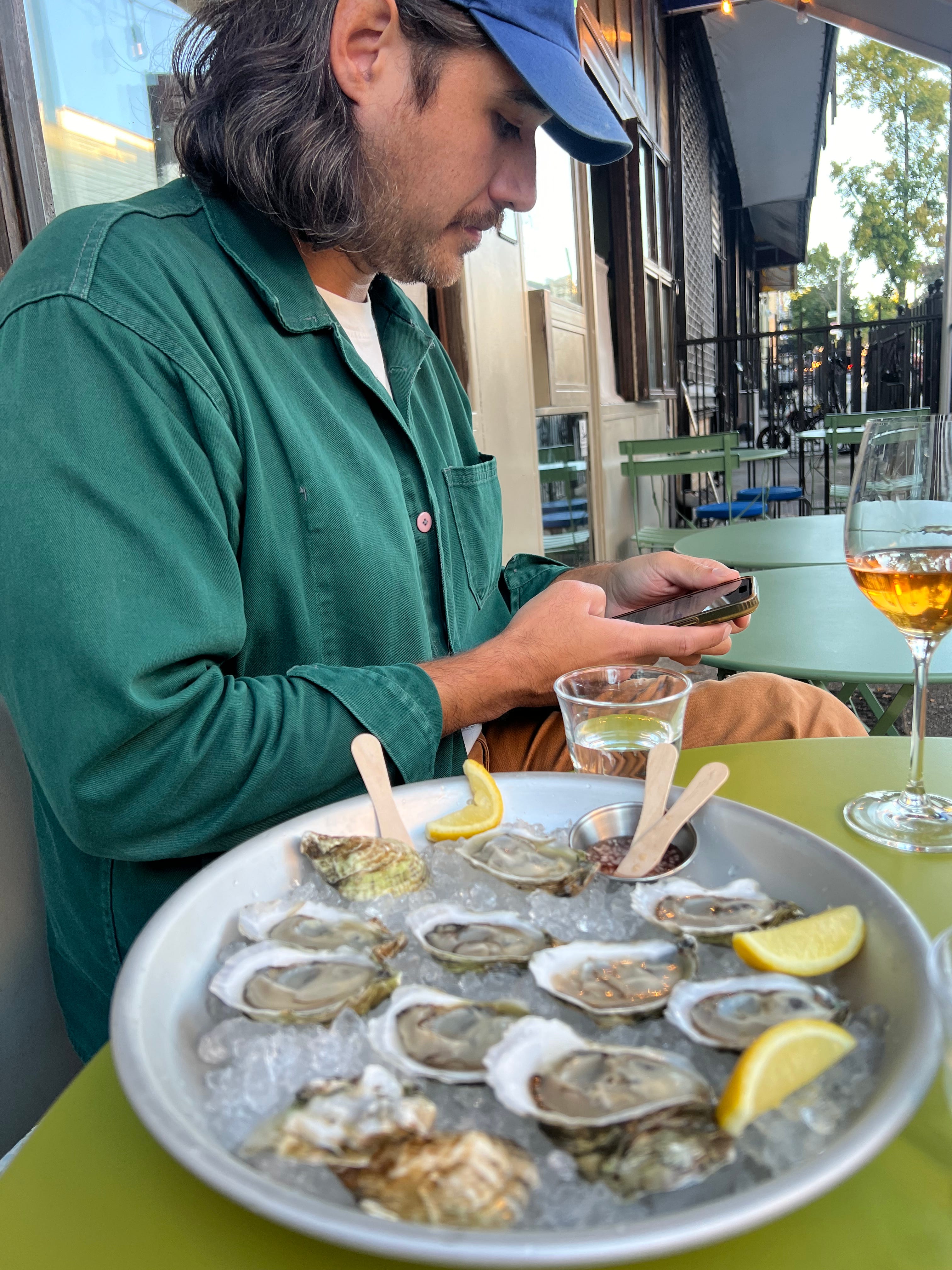
Of course, the thought that I had simply gone as crazy as everyone else was near the front part of my mind. Was I avoiding dextrose, plastic water bottles, Saran wrapped sandwiches for my own weird sense of safety and control. Was I needlessly drinking wine without sulphur and eschewing Applebee’s, Dunkin Donuts and “bad vibes to my detriment? Why did I eat so many oysters?
I gave a shaky speech that night, extolling the virtues of level-headed winemakers who made wines under the auspices of a classical (read, Modern) balance of fruit and acid and structure. There is something beautiful in wines that taste like wine from the classical (read, Modern) terroirs, but secretly are merely grape ferments. I love to turn on new drinkers to wines like these. They can’t say what they like about this or that wine, but something makes them feel good. I thought, maybe all of it is just that. Like it or not, it just feels a little better when there isn’t a list of ingredients to accompany your wine ferment, whether you can perceive the difference or not.
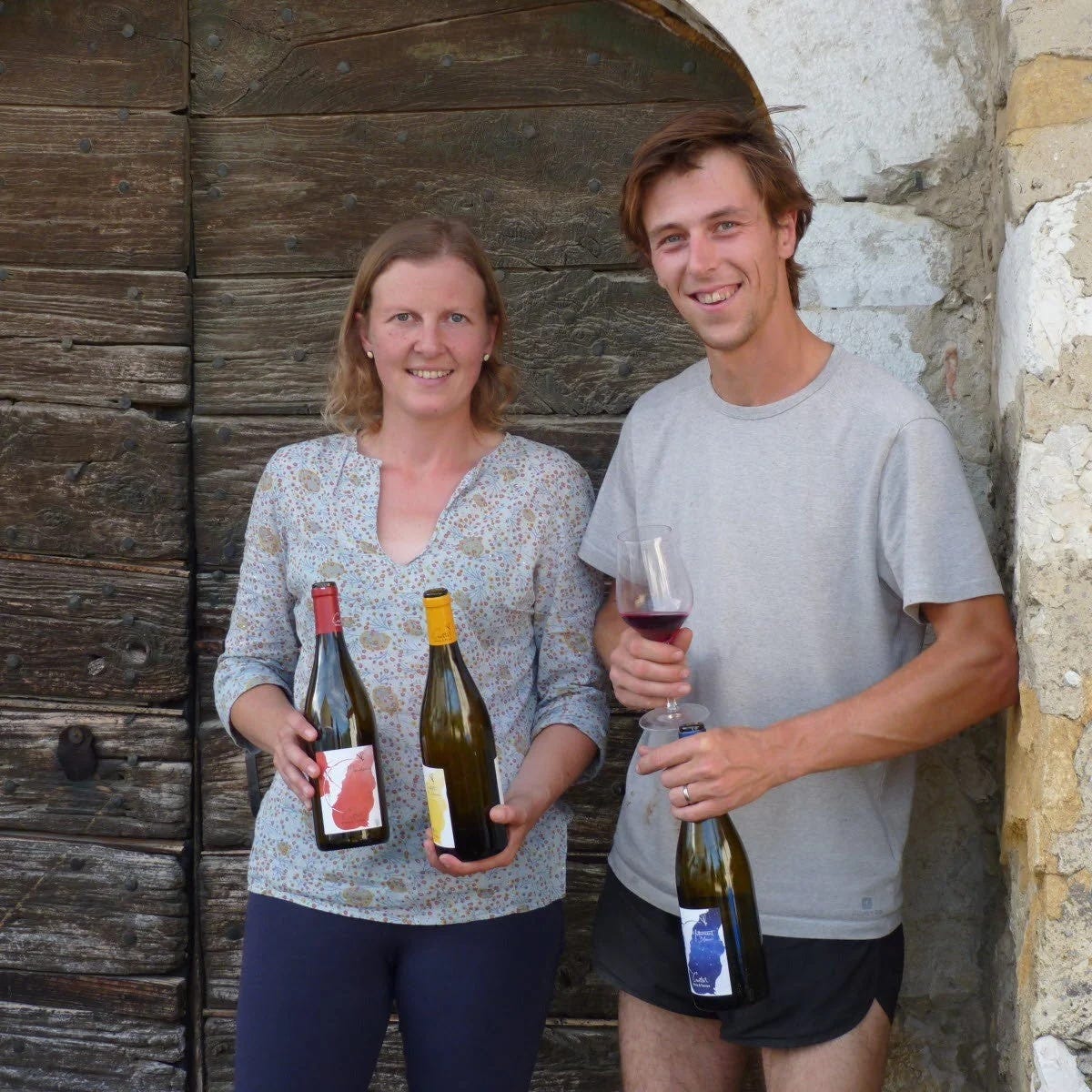
Fair enough, I thought cynically, and returned to our offices in New York, all the while awaiting a sailboat that seemed to arrive just as the longshoreman strike was setting in. We got our wine, but it had been a real nail-biter for me. The wines of Marie and Florian Curtet had completely beguiled me in France, time and time again. They seemed to live on and on in my palate, followed by my head, and then my heart. They felt headful and alive, full of trace minerals.
However, these two were of a mind that no chemical intervention whatsoever, in the vineyards or in the cellar, would make for a wine of the quality they sought. No treatments, no sulphur, no tractors, no gasoline, nothing. Would the wines and their magic make the journey? Had I been duped by their magical little utopia of fancy dry toilets and family grown vegetables? I remember Zoë and I doubled over in laughter, leaving the Sheraton.
She asked, “What’s the lesson, here?”
We tasted the Curtet together when it arrived in the office, where she found enough of a solution for me.
“It’s worth taking the chance. It’s okay to be a little stupid.”
2023, step by step
Over the past few years, we have initiated changes towards a wilder, freer and more diversified “culture”. Here is a small anthology of our personal satisfactions for the past year and our current and future projects.
Our interactions with crops are now limited to pruning, sowing, planting, picking and harvesting. We had the intuition to be sometimes in the interference with the plant, in the dirigisme, and that did not seem to us completely founded but rather inherited from a questionable cultural baggage. Little by little we learn to refrain from acting. What freedom found for the plants, but also for us!
We lived as a contradiction in the fact of seeking purity in the cellar but still using the tractor (therefore oil) and treatments (certainly organic) in the vineyards. We have significantly reduced our dependence on a system that does not suit us. Not a liter of fuel, not a gram of treatment and fertilizer used to cultivate this year. We are immensely satisfied to have experienced this possibility.
Our 2022 vintage will therefore be our first pure vintage, from the vine to the cellar. A small harvest but what satisfaction! We have thus implemented our deep convictions: the vine does not need to suffer or be treated to water us. It now seems unthinkable to us to backtrack.
Trees are taking up more and more space in our cultures. Whether it is fruit, fodder, shade or support for a vine, tomorrow it will mainly be a food crop. From the vine to the olive tree, from the apple tree to the cereals, the plots where we only grew grapes yesterday, tomorrow we will also provide oil, flour, juice, ciders...
We continue to diversify beyond the tree and have grown different cereals: Chautagne rye, ancient wheat, millets from peasant seeds. Our challenge is to self-produce our cereals between friends and neighbors, to cultivate them, harvest them, transform them manually without oil or electricity. A bread oven is planned near the cellar to combine food autonomy and conviviality.
Between the urgency of finding solutions for tomorrow and the acceptance of the slowness of living processes, all these small steps allow us to feel in our rightful place. A place where man is part of nature and his main concern is to do no harm.
-Marie and Florian CURTET
Further Reading
Morel, François. Le Vin Au Naturel: La Viticulture Au plus Près Du Terroir. Editions Sang de La Terre, 2020.
Bouazzouni, Nora. Steaksisme: En Finir Avec Le Mythe de La Végé et Du Viandard. Nouriturfu, 2021.
Fisher, M. F. K., and Martin Mazorra. Consider the Oyster. The Prototype Press at Tranquility, 2021.
Lefebrve, David. “Concernant Son Analyse de La Mineralité.” N° 100, Spring, 2011.